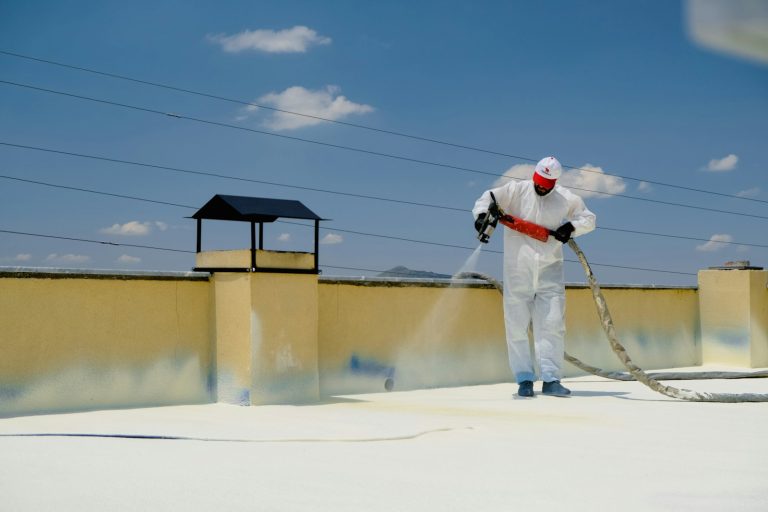
Fiberglass and cellulose slow heat, but air still moves through and around them. Spray foam expands into every gap as it is applied, so it insulates and stops the air leaks that drive up cooling bills in North Texas summers.
We install both open-cell and closed-cell foam and recommend the right one for each part of your building — or a mix of the two.
Seals air leaks around wiring, plumbing, top plates and rim joists
Keeps attics and rooms closer to the thermostat setting
Attics and rooflines, exterior walls, crawl spaces and rim joists, garages, bonus rooms and additions — plus barndominiums, metal shops, pole barns, warehouses and other commercial buildings.
Open-cell vs. closed-cell
Open-cell is lighter, more affordable and excellent at sound control — the go-to for most home attics and interior walls. Closed-cell is denser, has roughly twice the R-value per inch, blocks moisture and adds strength — ideal for metal buildings and crawl spaces. See typical costs.
Compare
Open-cell vs. closed-cell at a glance
Feature
Open-cell foam
Closed-cell foam
R-value per inch
About R-3.5 to R-3.8
About R-6 to R-7
Density
Light, soft and spongy (~0.5 lb/ft³)
Dense and rigid (~2 lb/ft³)
Moisture
Lets vapor pass; not for wet areas
Acts as a vapor barrier
Sound
Excellent at dampening noise
Good
Structure
No added strength
Adds racking strength to walls
Best for
Attics, rooflines, interior walls
Metal buildings, crawl spaces, exterior walls
Relative cost
Lower per square foot
Higher per square foot
Typical manufacturer ranges; exact values depend on the product used.
Our work
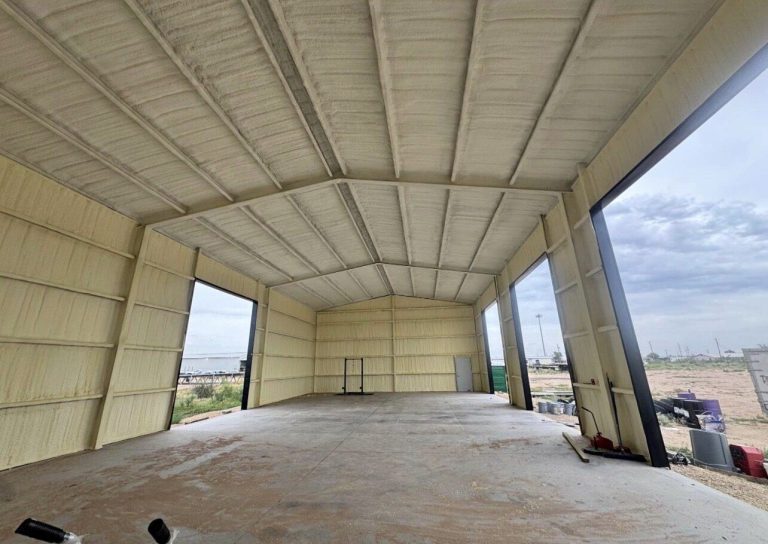
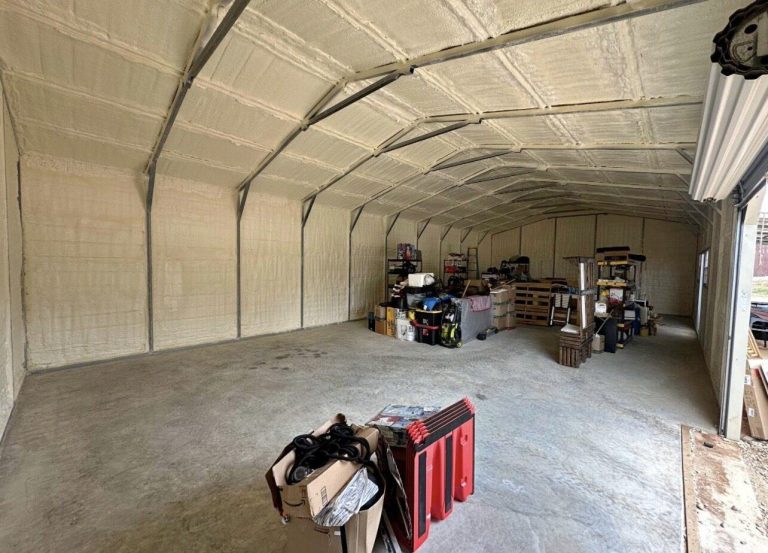
Recent spray foam insulation projects
Real jobs from our crew — shops, barns and metal buildings insulated with spray foam.
It is a two-part polyurethane foam. The two liquids are mixed at the spray gun and expand on contact, filling cavities and bonding to the framing and sheathing.
How long does spray foam last?
Properly installed spray foam does not sag or settle the way loose-fill can, so it is expected to last for the life of the building in most cases.
Can you spray foam an existing home?
Yes. Attics, rooflines, crawl spaces and rim joists are the most common retrofit areas. Closed walls can sometimes be done too — we will tell you what makes sense after we look.
Will spray foam lower my energy bills?
Most homeowners see lower cooling costs because air leaks are sealed and the attic stays much cooler. Savings vary with the house, the HVAC system and how you set the thermostat.