Closed-Cell Spray Foam Insulation
Dense, rigid foam with the highest R-value per inch. It blocks moisture, stops condensation on metal and adds strength to walls.
Built for metal, moisture and tight spaces
Closed-cell foam cures into a hard, dense layer. At roughly R-6 to R-7 per inch, it delivers serious insulation in a thin layer — useful where wall depth is limited.
Because it acts as a vapor barrier, it is the right foam for metal buildings, barndominiums, crawl spaces and anywhere warm, humid air would otherwise condense on a cold surface.
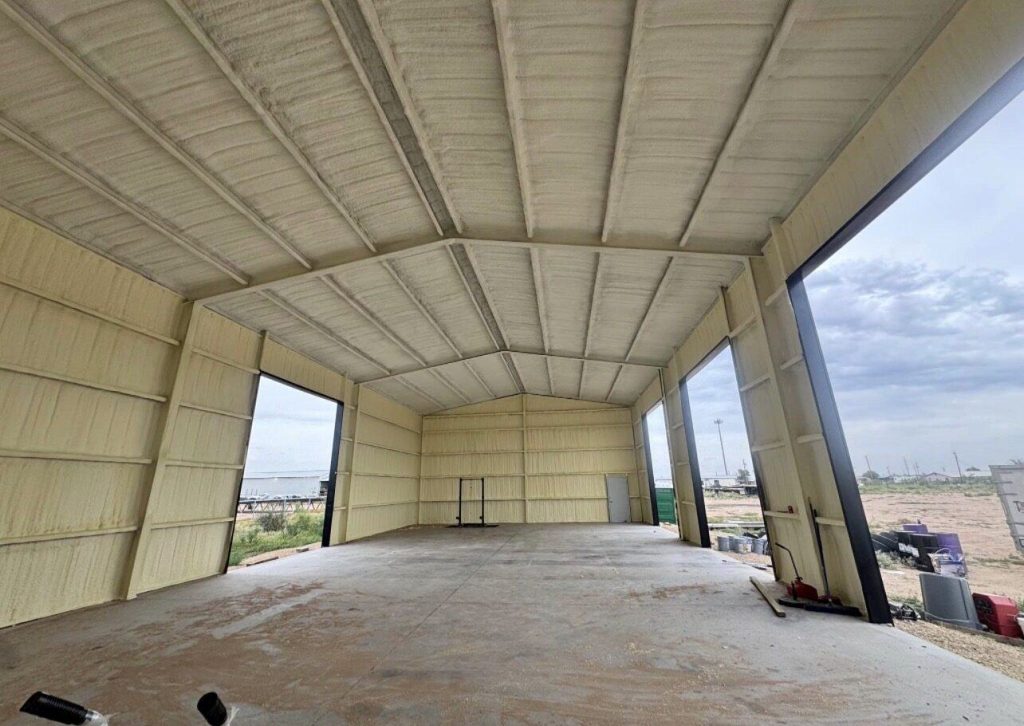
- Metal buildings, shops and barndominiums
- Pole barns and ag buildings
- Crawl spaces and rim joists
- Exterior walls where space is tight
- Commercial and warehouse projects
Stopping condensation on metal
Bare steel panels sweat when humid air hits a surface that is cooler than the dew point. Closed-cell foam bonded directly to the panels keeps that air off the metal — the main reason it is the standard for barndos and metal buildings.
Added strength
Closed-cell foam bonds framing and sheathing together and adds racking strength to walls and roof decks — a nice bonus in a region with strong spring storms.
Open-cell vs. closed-cell at a glance
| Feature | Open-cell foam | Closed-cell foam |
|---|---|---|
| R-value per inch | About R-3.5 to R-3.8 | About R-6 to R-7 |
| Density | Light, soft and spongy (~0.5 lb/ft³) | Dense and rigid (~2 lb/ft³) |
| Moisture | Lets vapor pass; not for wet areas | Acts as a vapor barrier |
| Sound | Excellent at dampening noise | Good |
| Structure | No added strength | Adds racking strength to walls |
| Best for | Attics, rooflines, interior walls | Metal buildings, crawl spaces, exterior walls |
| Relative cost | Lower per square foot | Higher per square foot |
Typical manufacturer ranges; exact values depend on the product used.
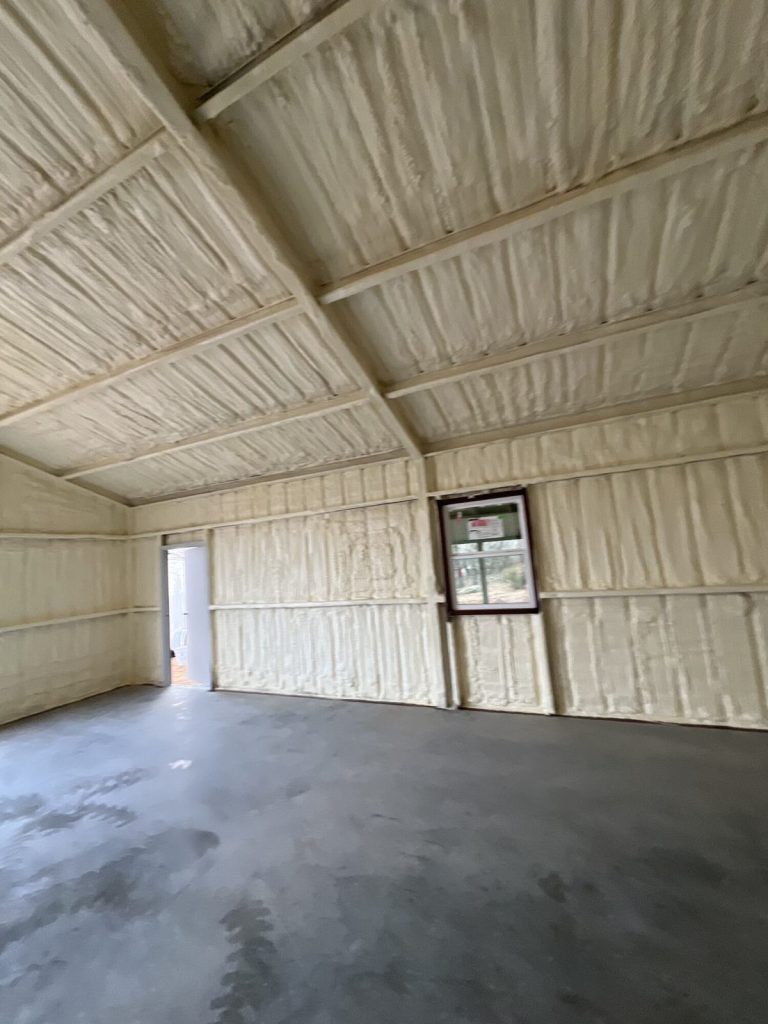
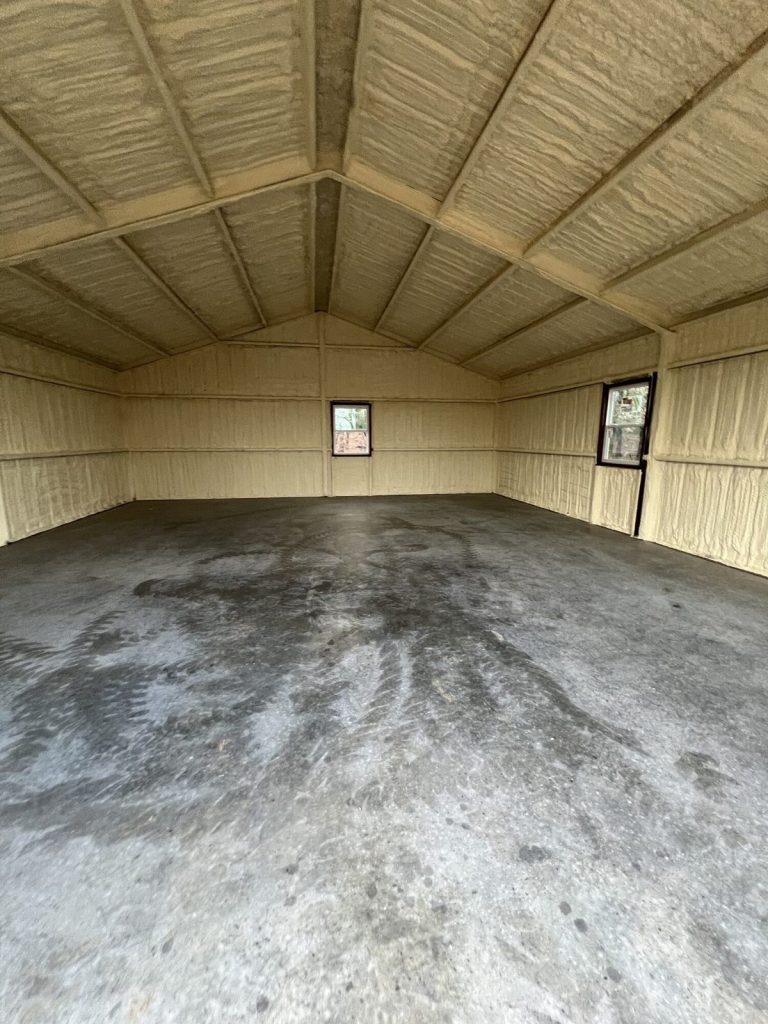
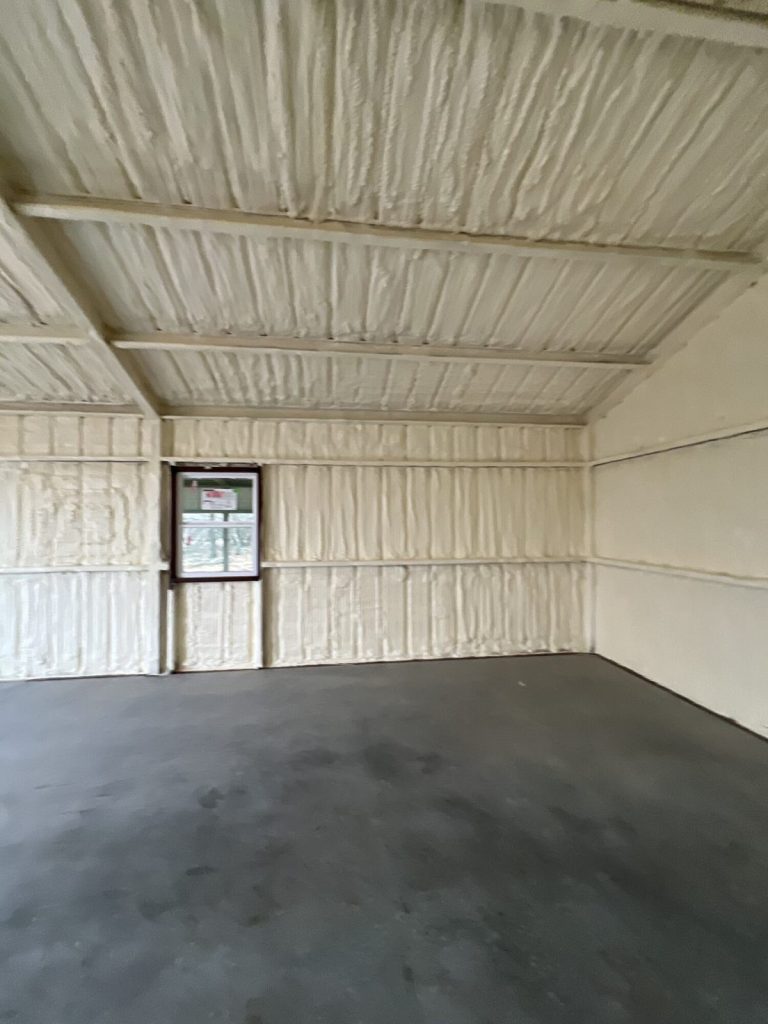
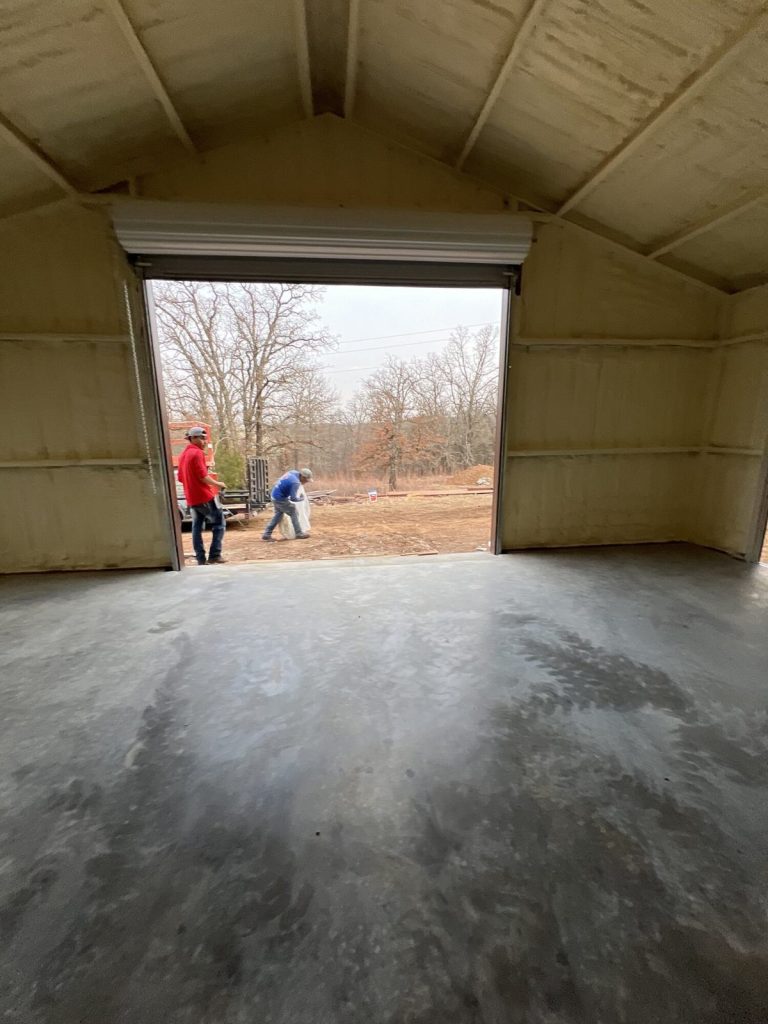
Recent closed-cell spray foam projects
Real jobs from our crew — shops, barns and metal buildings insulated with spray foam.
Closed-Cell Spray Foam FAQ
Still have a question? Call 9402910138 or send a quick request and we will get back to you.
Is closed-cell foam worth the higher price?
Where moisture, metal or limited space are involved, yes. For a typical home attic, open-cell usually gives better value.
How thick is closed-cell foam applied?
Commonly 1 to 3 inches on metal buildings and crawl spaces, and more in walls or roof decks where higher R-values are needed.
Can closed-cell foam go on the inside of a metal roof?
Yes. It bonds to the panels and purlins, insulating and stopping condensation in one step.
More ways we can help
Air-sealing insulation for walls, attics and rooflines in new and existing buildings.
Soft, expanding foam that seals and quiets homes — great for attics and interior walls.
Seal the roof deck so your attic stays near living-space temperature through Texas summers.
Stop condensation and heat gain in barndominiums, shops, garages and pole barns.
Ready for a cooler, quieter, more efficient building?
Tell us about your home, shop or barn. We will recommend the right foam and give you a clear, written estimate.